









Aug 21, 2024
Blog




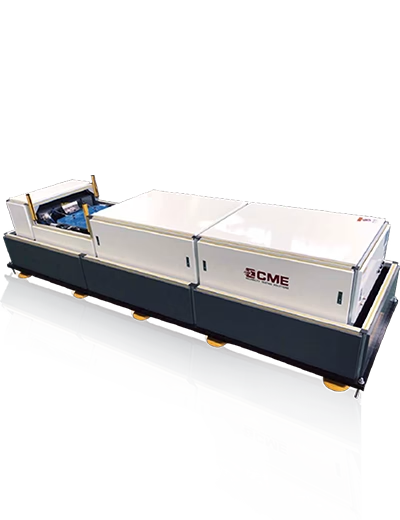
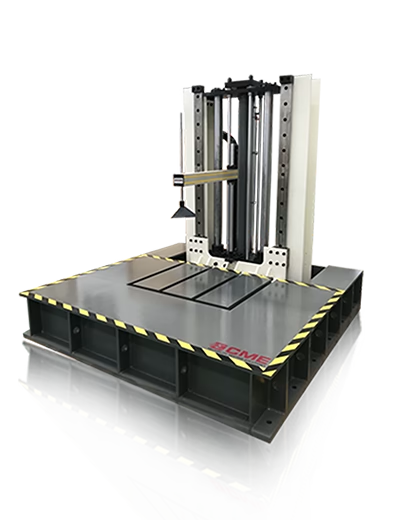
End User: EVE Energy Co., Ltd.
Industry: New Energy / Lithium-ion Batteries
Application: Horizontal Shock Testing / Battery Reliability Verification
Location: China
Equipment Model: KRD12-1000A Horizontal Shock Test System
Project Overview
As electric vehicles, energy storage systems, and advanced battery products continue to evolve, batteries and related products may experience various mechanical shock conditions during transportation, operation, and demanding service environments.
Reliable and repeatable shock testing is therefore an important part of evaluating mechanical integrity, safety, and product reliability.
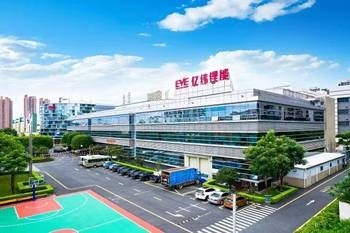
EVE Energy Co., Ltd. is a global lithium battery company established in 2001 and listed on the Shenzhen Stock Exchange in 2009. The company operates across consumer batteries, power batteries, and energy storage batteries, with products covering battery cells, modules, and system-level solutions.
For large and heavy battery products and related test specimens, EVE Energy required a horizontal shock testing system combining high load capacity, a large working table, a wide shock parameter range, and high-speed data acquisition.
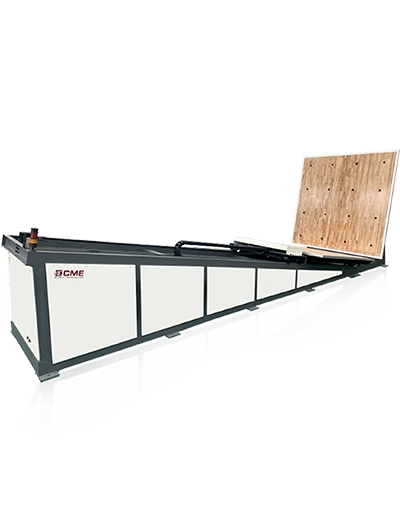
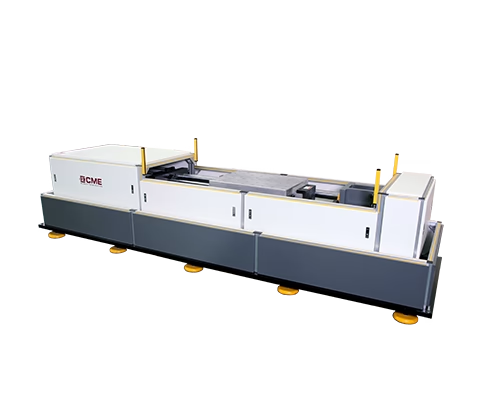
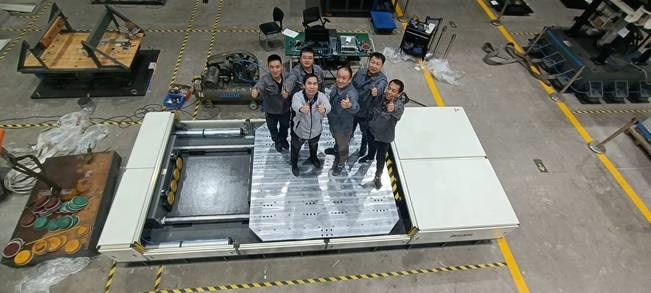
To meet these requirements, CME provided the KRD12-1000A Horizontal Shock Test System for EVE Energy’s mechanical shock testing and reliability verification applications.
About the End User
EVE Energy Co., Ltd.

Established in 2001, EVE Energy Co., Ltd. is a global lithium battery company with core technologies and solutions covering consumer batteries, power batteries, and energy storage batteries.
Its product portfolio includes primary lithium batteries, small lithium-ion batteries, cylindrical cells, prismatic NCM and LFP cells, pouch NCM cells, and battery systems.
EVE Energy has developed a global R&D, manufacturing, sales, and service network.
For battery products, mechanical safety, structural integrity, and reliable performance under specified shock conditions are important considerations throughout product development and validation.
1. The Challenge
As battery products become larger and more powerful, conventional small-scale shock testing equipment may not be sufficient for applications involving large specimens, high loads, and different shock conditions.
The key testing challenges included:
Large battery products and test fixtures can have considerable mass, requiring sufficient load capacity to maintain stable test conditions during shock excitation.
As battery products become larger, both specimen and fixture dimensions increase. A large working table is therefore required to accommodate different test configurations.
Different products and test standards may require different acceleration and shock-duration conditions. The testing system therefore needs a broad adjustable shock parameter range.
Shock testing is a highly transient process that requires reliable high-speed data acquisition. Accurate measurement and recording of the shock event are essential for subsequent analysis and verification.
2. The Solution
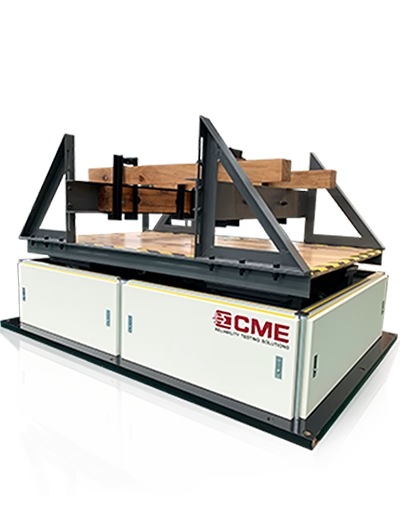
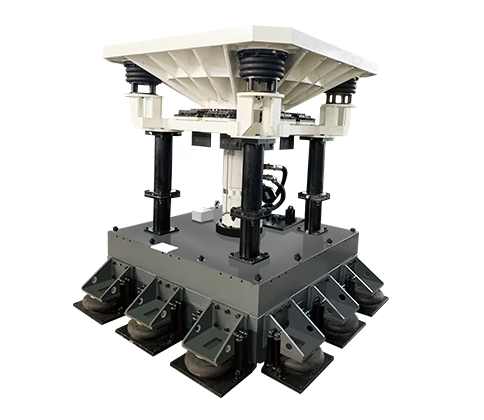
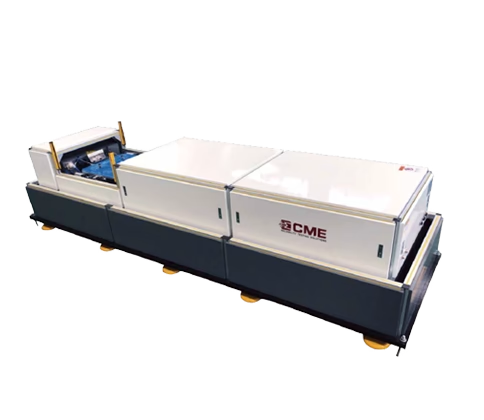
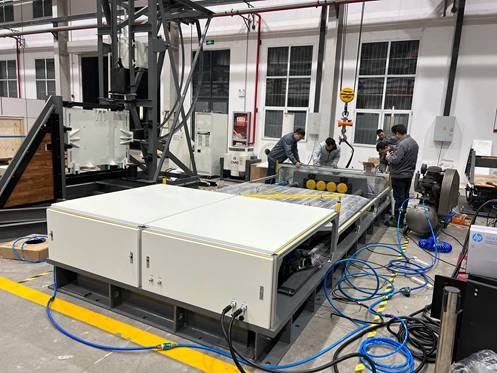
KRD12-1000A Horizontal Shock Test System
To meet EVE Energy’s requirements for high-load horizontal shock testing of large products, CME provided the KRD12-1000A Horizontal Shock Test System.
The system uses horizontal shock excitation to generate controlled and repeatable mechanical shock conditions for large battery products and related test specimens.
With a maximum rated load of 1000kg, including fixtures and test specimens, and a 2500 × 2500mm working table, the system is designed to accommodate large and heavy test configurations.
The system is also equipped with a 16-channel control and measurement instrument and 16 sensors, with a sampling frequency of 192kHz, providing high-speed multi-channel data acquisition during shock testing.
Equipment Configuration
| Parameter | Specification |
| Equipment Model | KRD12-1000A |
| Rated Load | 1000kg, including fixtures and test specimen |
| Shock Type | Horizontal Shock |
| Shock Waveform | Half-Sine Wave, with provision for later addition of Trapezoidal and Terminal Peak Sawtooth waveforms |
| Peak Acceleration | 10–200g |
| Shock Duration | 80–6ms |
| Working Table Size | 2500×2500mm |
| Table Thread | M16 |
| Thread Depth | 25mm |
| Hole Pitch | 100×100mm |
| Equipment Weight | 15,000kg |
| Overall Dimensions | 10000×3500×1000mm |
| Power Supply | AC 220V±10%, 50Hz/ AC 380V±10%, 5kVA |
| Air Pressure | 0.6–1.0MPa |
| Control& Measurement | 16-channel control and measurement instrument |
| Sampling Frequency | 192kHz |
| Number of Sensors | 16 |
3. Technical Highlights
With a maximum rated load of 1000kg, including fixtures and test specimens, the KRD12-1000A is designed for high-load horizontal shock testing of large and heavy products.
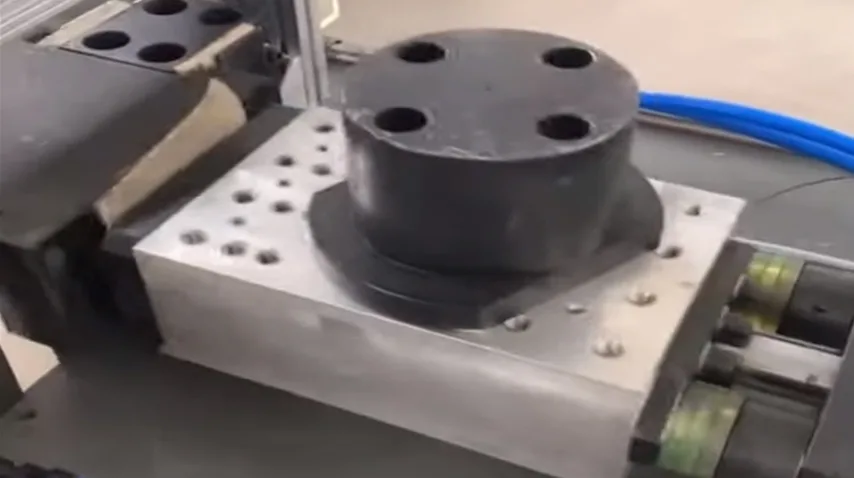
The system features a 2500×2500mm working table with M16 mounting threads and a 100×100mm hole pitch, providing sufficient mounting space for large specimens and fixtures.
The system provides a peak acceleration range of 10–200g and a shock duration range of 6–80ms, allowing test conditions to be configured according to different requirements.
The system primarily supports half-sine shock waveforms, while retaining the capability for future expansion to trapezoidal and terminal peak sawtooth waveforms, providing greater flexibility for different testing conditions.
The system is equipped with a 16-channel control and measurement instrument, a sampling frequency of 192kHz, and 16 sensors, enabling high-speed multi-channel acquisition of transient shock data.
With its combination of high load capacity, large working area, wide shock parameter range, and high-speed data acquisition, the KRD12-1000A provides a dedicated platform for mechanical shock testing and reliability verification of battery products and related test specimens.
4. Battery Shock Testing Standards & Typical Test Conditions
Mechanical shock testing is an important part of battery safety, structural integrity, and reliability verification for power batteries and energy storage batteries.
Different standards and testing specifications define different mechanical shock conditions for different types and levels of battery products. Standards and practices such as UN 38.3, SAE J2464, and UL 2580 include shock and abuse testing requirements for batteries or rechargeable energy storage systems.
Applicable Standards & References
Typical Battery Shock Test Conditions
Depending on the battery product and applicable testing requirements, typical shock conditions used in industry may include different combinations of peak acceleration and shock duration:
Key Specifications:
16g@60ms
24g@16ms
25g@15ms
30g@15ms
50g@11ms
50g@15ms
150g@6ms
5. Project Summary
The KRD12-1000A Horizontal Shock Test System provides EVE Energy with high-load and high-precision mechanical shock testing capability for large battery products and related test specimens.
With a maximum rated load of 1000kg, a 2500×2500mm working table, a peak acceleration range of 10–200g, a shock duration range of 6–80ms, and a 192kHz high-speed data acquisition system, the KRD12-1000Ais designed to meet demanding shock testing requirements across different test conditions.
This project further demonstrates CME’s capability to provide specialized mechanical environmental testing solutions for new energy batteries and other high-reliability products.