









Aug 21, 2024
Blog




A Cost-Effective Alternative to R100 Deceleration Sled Testing for EV Battery Safety Validation
Customer: SK On Hungary Kft.

Industry: EV Battery Manufacturing
Application: High-Energy Mechanical Shock Testing
Equipment: KRD12-200S High-Energy Shock Test System
Challenge
As EV battery safety requirements continue to increase, battery manufacturers must perform high-energy mechanical shock testing to validate product performance under vehicle crash, transportation, and extreme operating conditions.
SK On Hungary Kft. needed an effective solution to test battery modules and battery packs while maintaining compliance with industry standards.
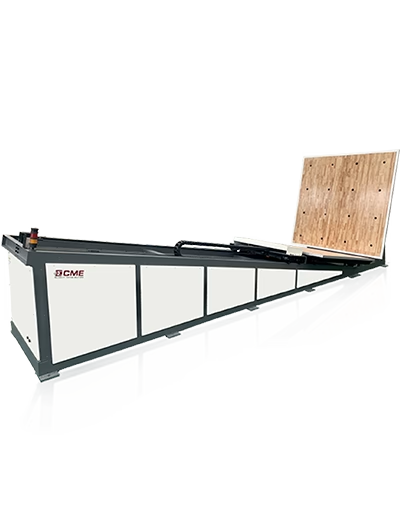
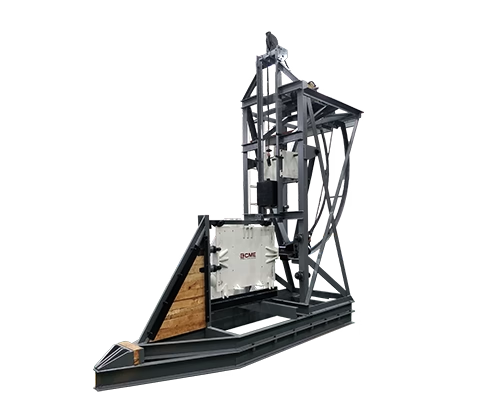
Traditional UN ECE R100 deceleration sled testing can simulate real crash events, but it also presents several challenges:
SK On Hungary Kft. was seeking a more efficient and cost-effective solution that could maintain testing capability while reducing overall investment.
Solution
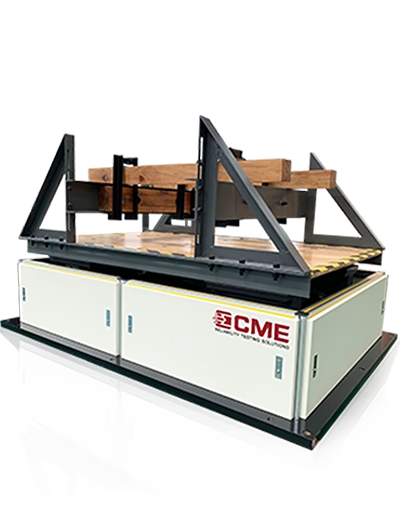
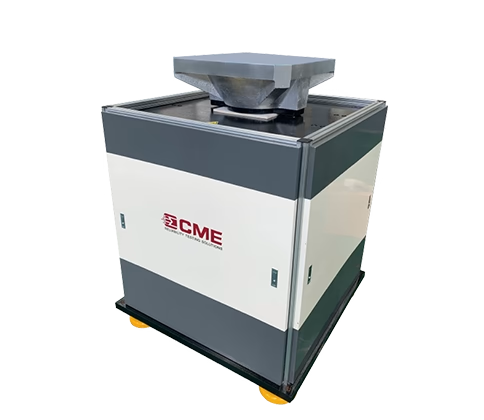
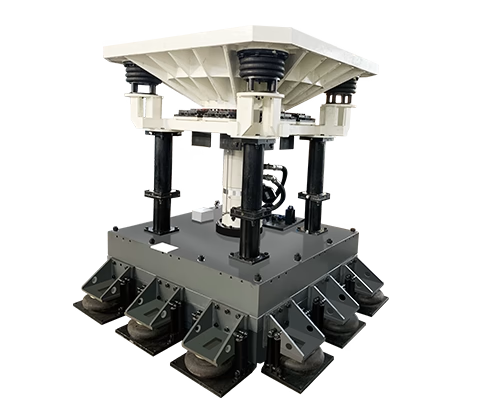
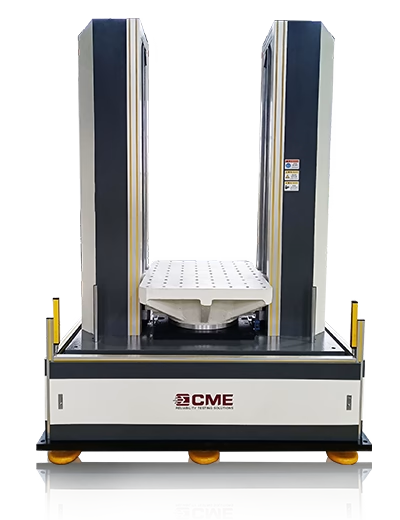
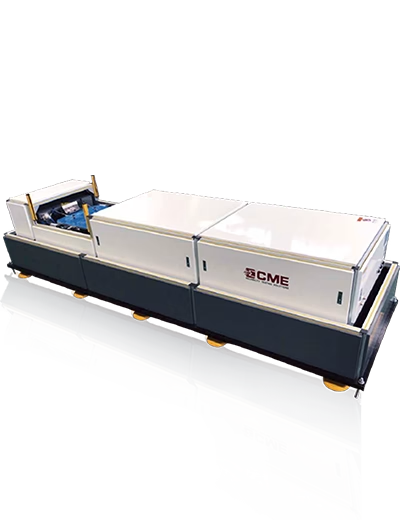
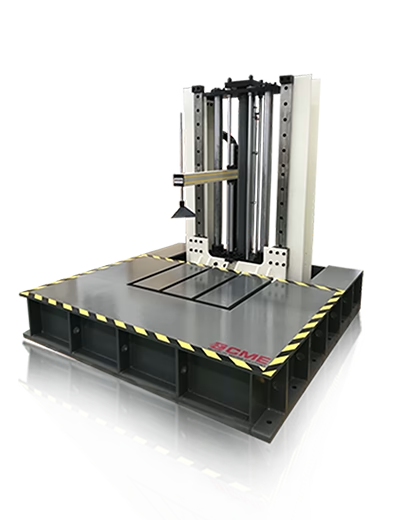
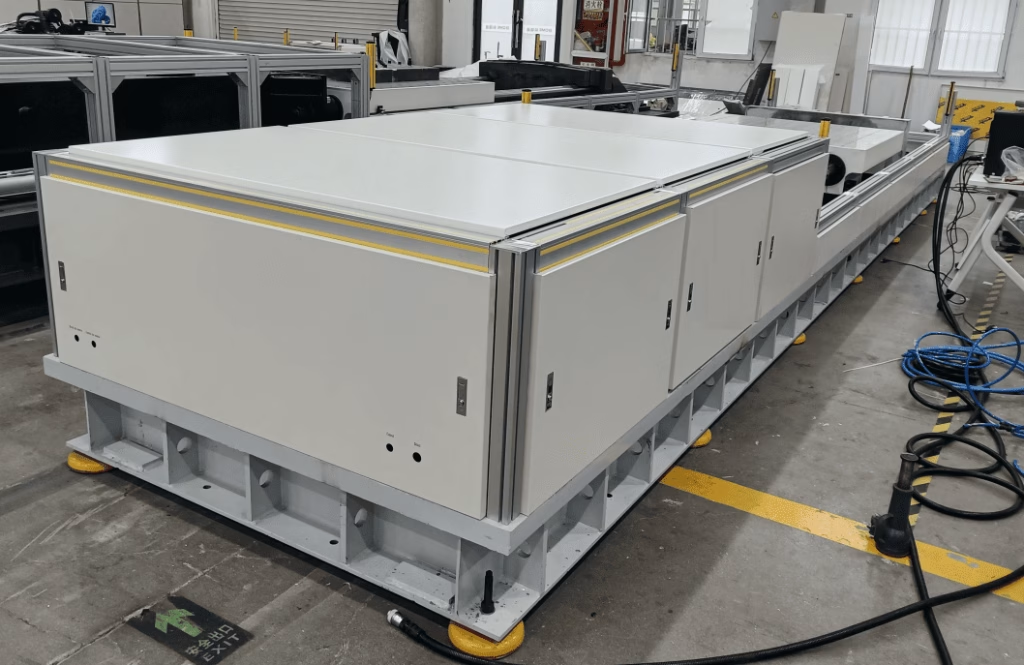
To address these challenges, CME supplied the KRD12-200S High-Energy Shock Test System.
The system generates precisely controlled high-energy shock pulses to simulate the mechanical loads experienced by EV batteries during vehicle crashes, providing a practical and economical alternative to conventional R100 deceleration sled testing.
Solution Advantages
Lower Capital Investment
The KRD12-200S eliminates the need for large sled tracks, drive systems, and extensive facility construction, significantly reducing laboratory investment.
Compact Footprint
Its compact design requires substantially less floor space than traditional deceleration sled systems.
Improved Testing Efficiency
Fast setup and convenient fixture replacement enable efficient testing of different battery products and accelerate development cycles.
Excellent Repeatability
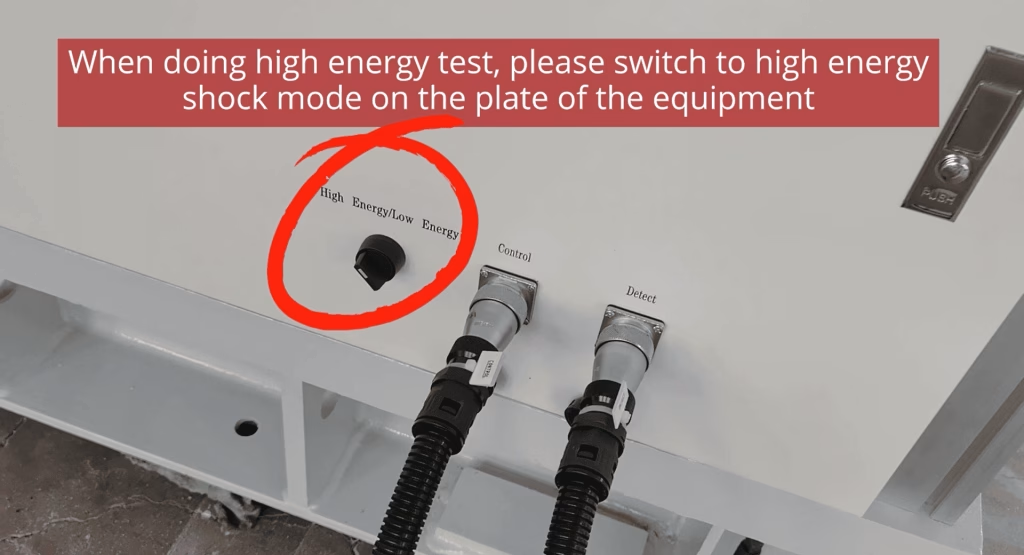
Advanced open loop control technology ensures highly repeatable shock pulses and reliable test results.
Wide Application Range
Suitable for battery cells, battery modules, battery packs, and energy storage systems.
Compliance with Major Standards
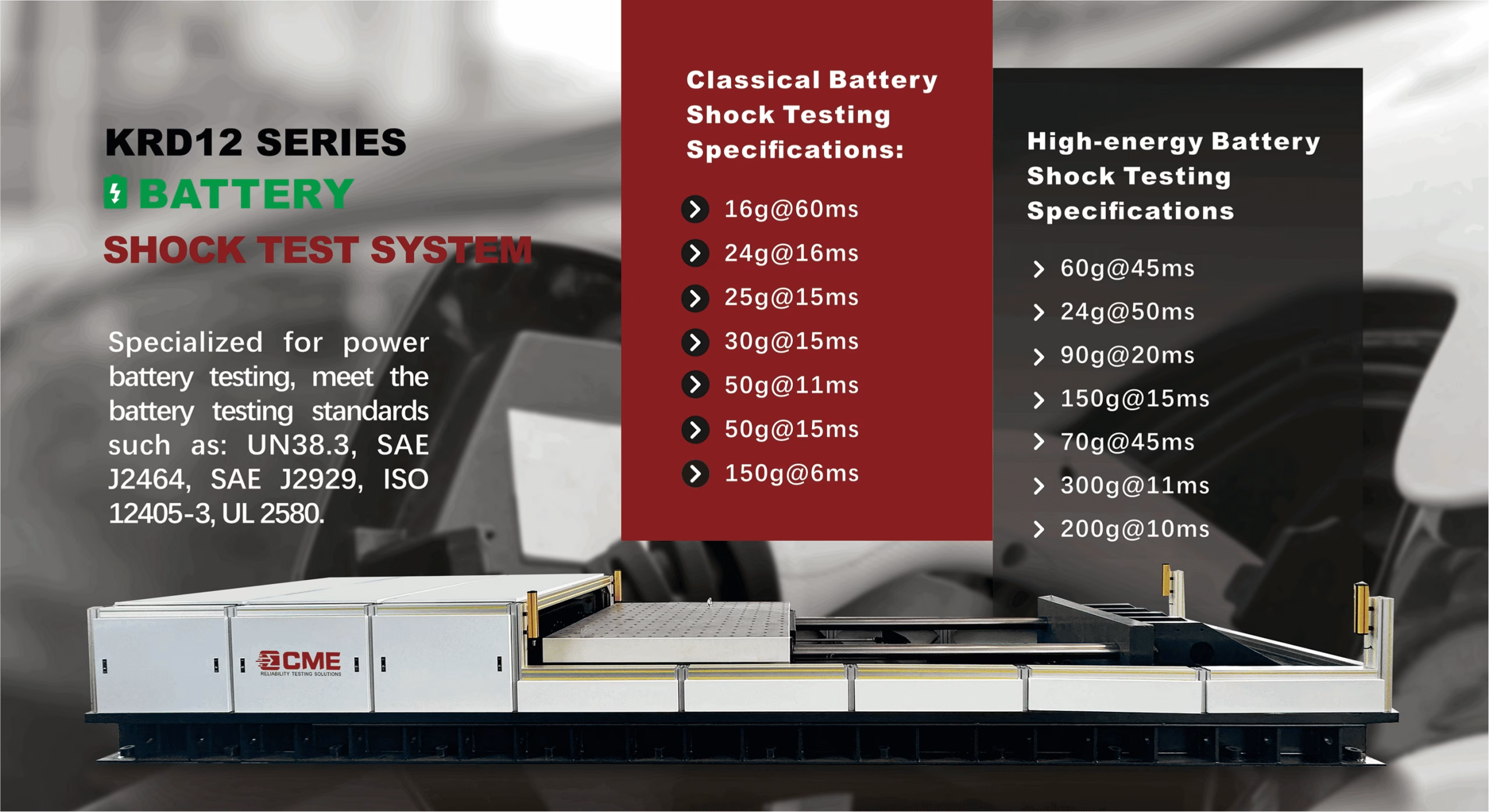
Supports mechanical shock testing requirements specified by major domestic and international battery safety standards.
Typical Battery Shock Test Profiles
Standard Battery Shock Conditions
High-Energy Battery Shock Conditions
Applicable Standards
China Standards
International Standards
Results
By implementing the KRD12-200S High-Energy Shock Test System, SK On Hungary Kft. successfully established an efficient battery shock testing capability.
Eliminated the need for a large-scale deceleration sled facility and significantly reduced laboratory construction costs.
Reduced maintenance, facility operation, and testing expenses.
Accelerated battery development and validation through faster test preparation and execution.
The compact system footprint maximized valuable laboratory space.
Supported compliance testing according to major domestic and international battery regulations.
Highly repeatable shock pulses provided accurate and dependable data for battery safety validation.
By adopting the CME KRD12-200S High-Energy Shock Test System, SK On Hungary Kft. obtained a cost-effective alternative to conventional R100 deceleration sled testing, achieving reliable testing performance while significantly reducing overall investment and operational costs.