What is a mechanical shock test machine?
Shock motion can be classified into three types based on time-domain characteristics: pulse type, step type, and complex oscillation type.
Shock testing is conducted to assess a product’s ability to withstand shock environments. On one hand, it should be as close as possible to real world conditions, and on the other hand, it should have a certain degree of reproducibility. For simpler shock environments, a simple pulse similar to that of the actual shock environment experienced by the product can be used in the testing equipment for shock testing. For more complex shock environments, a shock response spectrum analysis of the shock excitation source should be carried out, and a simple pulse similar to the shock response spectrum can be used in the testing equipment.
The working principle of the shock test machine
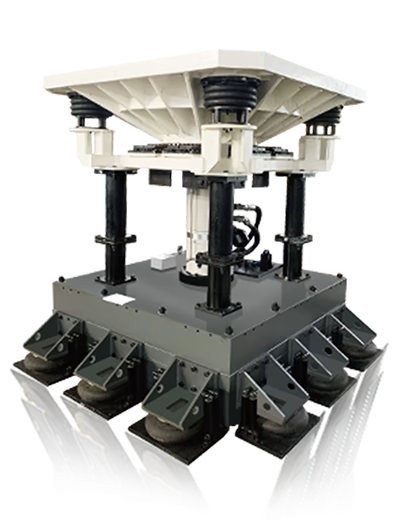
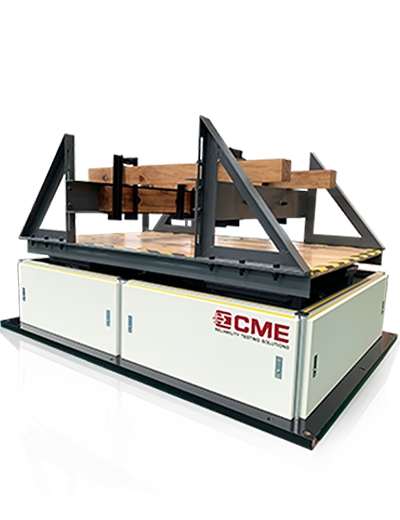
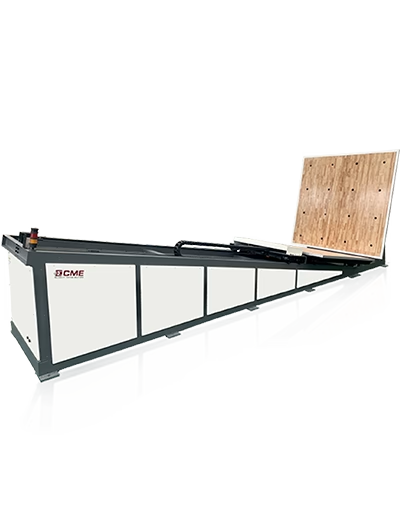
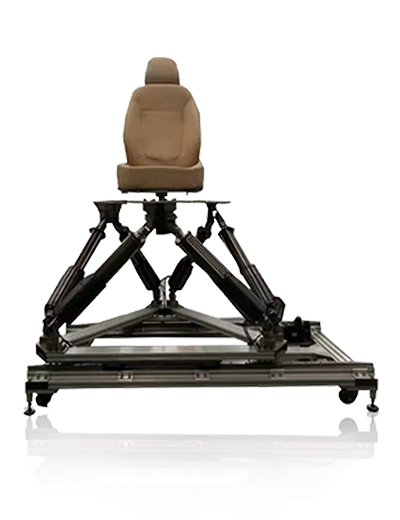
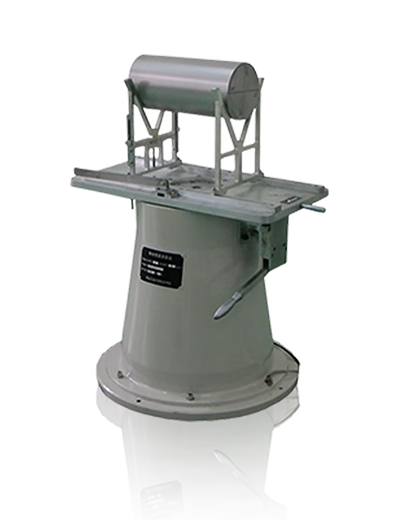
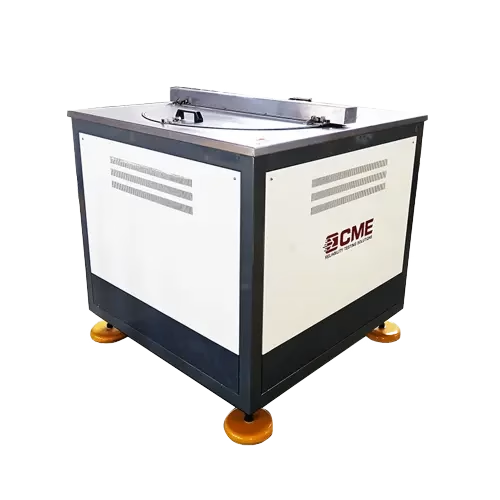
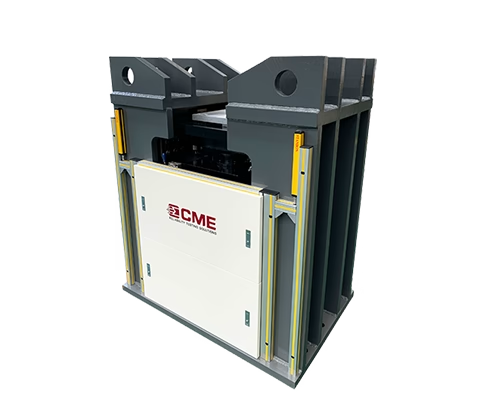
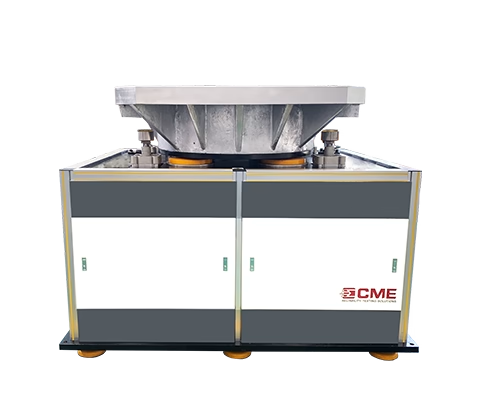
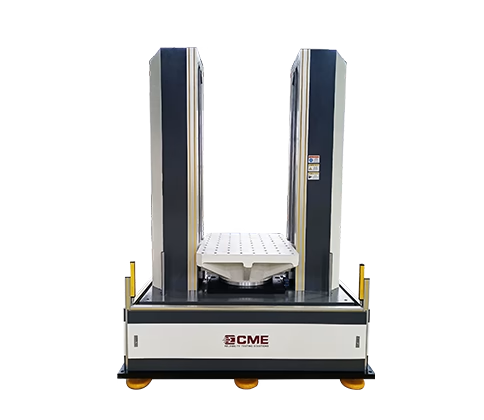
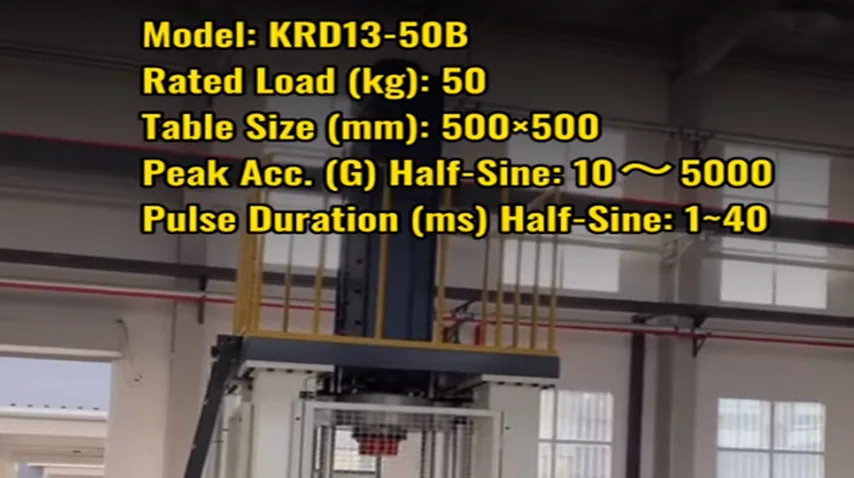
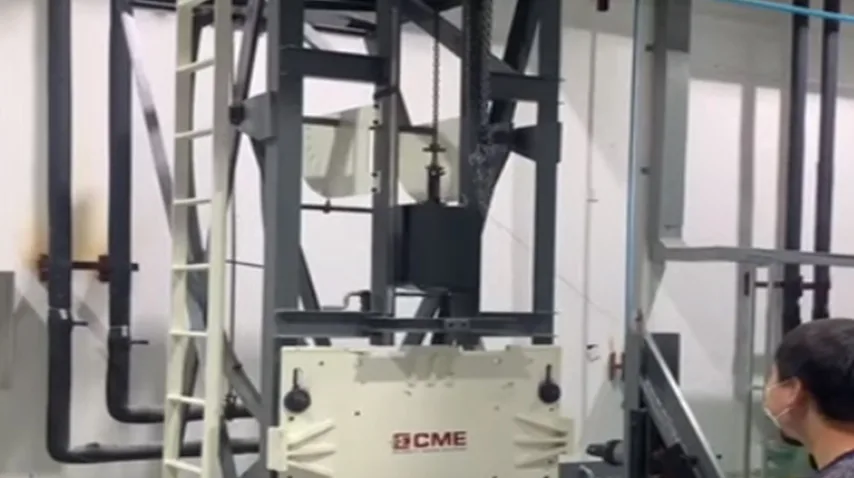
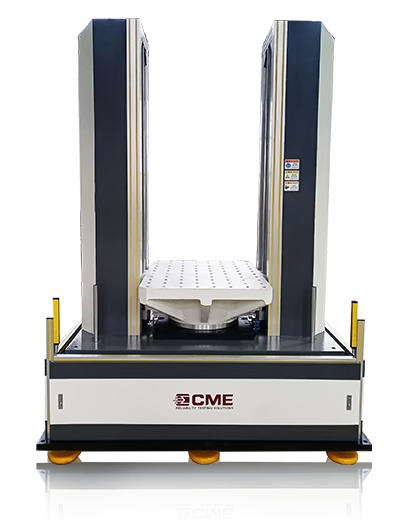
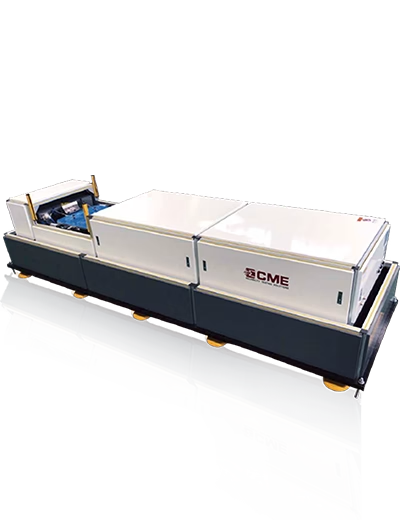
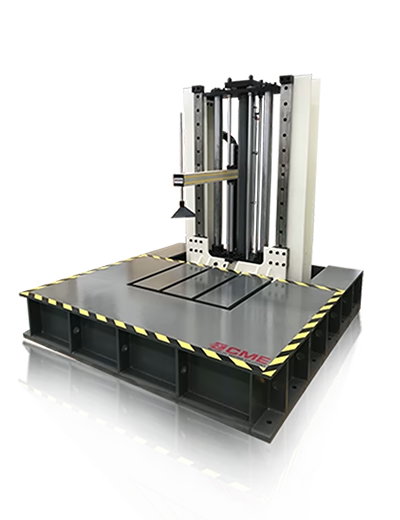
CME’s shock test machine can be divided into pneumatic shock test machines and hydraulic shock test machines.
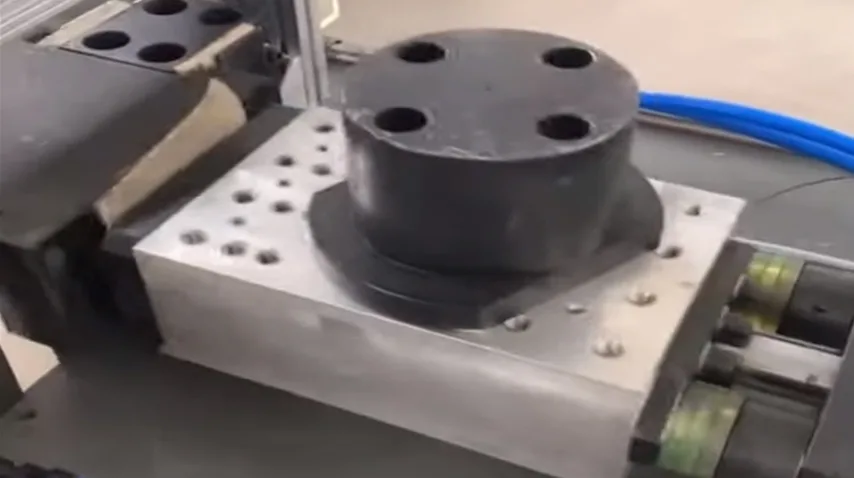
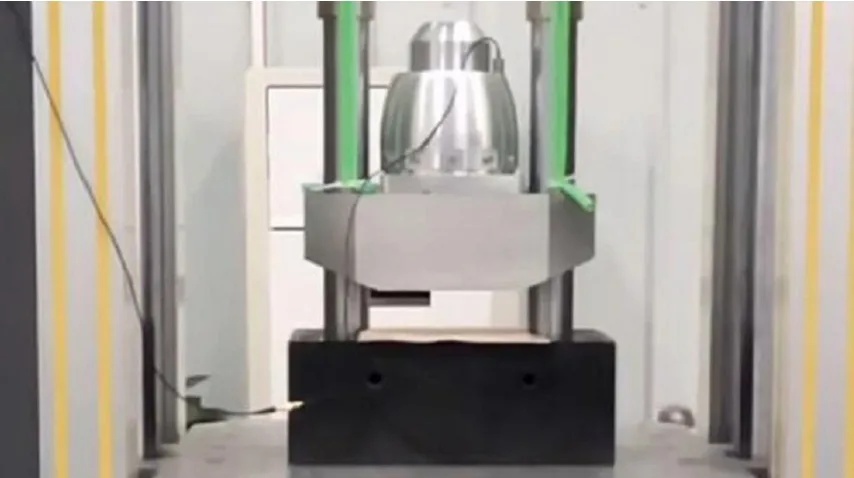
The pneumatic shock test machine has an ingenious design and simple and reliable structure. The test sample is installed on the worktable, which is guided by two high-precision sliding guides and can move up and down. The two cylinders are connected to the worktable by sliding guides. When the cylinders are inflated, the piston rod rises to drive the worktable to lift. The workbench is lifted. When it is raised to the set height, the cylinder quickly deflates, and the bottom surface of the worktable hits the waveform generator to complete a shock process. It can be seen from the above shock process that by adjusting the rising height of the worktable, different initial shock speeds can be obtained, and thus different shock overload values can be obtained; while changing the stiffness of the waveform generator, different pulse width values can be obtained. With coordination and cooperation, various shock test waveforms that meet the design index requirements can be obtained. By adjusting the input air pressure, the shock frequency can be controlled to meet the test requirements.
The purpose of using a shock test machine for mechanical shocks
According to the description of the shock test organization, the purpose of a mechanical shock test is:
-
Evaluate the ability of the equipment’s structure and function to withstand non-repetitive shocks that may occur during transportation and use.
-
Determine the vulnerability of the equipment for packaging design to protect the structural and functional integrity of the equipment.
-
Test the strength of the equipment fixed on a platform where bumps may occur.
Many machine parts are subject to shock loads (shock forces) during operation, such as punching machines, forging hammers, rock drills, and rivet guns, which all work under shock loads. It is also very common in daily life, it is subject to shock such as when a car is started, braked, or changes speed suddenly.