Aug 21, 2024
Blog



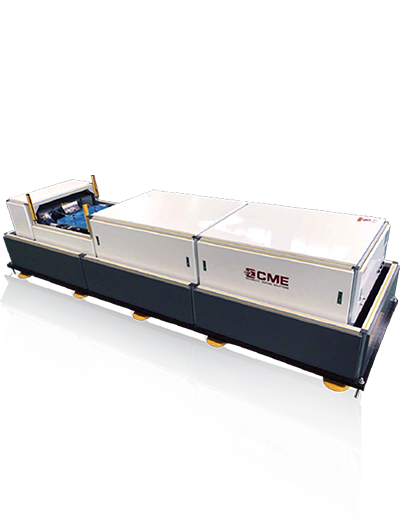
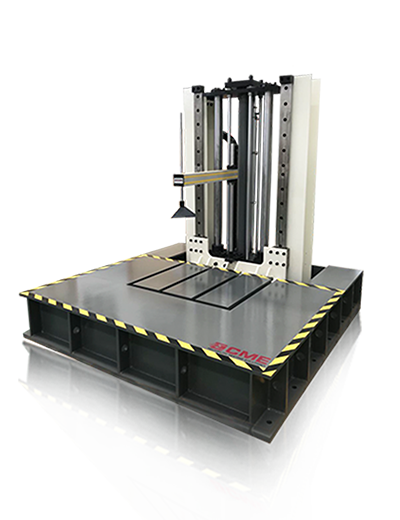
For decades, vibration testing has been the cornerstone of reliability engineering. A traditional single-axis or tri-axial vibration shaker excels at answering one critical question: "How does my product respond to oscillatory forces along a specific path?" However, the real world is not so neatly organized. Products in service are subjected to a complex symphony of simultaneous movements—not just vibration, but combined rotations, impacts, and sustained tilts.
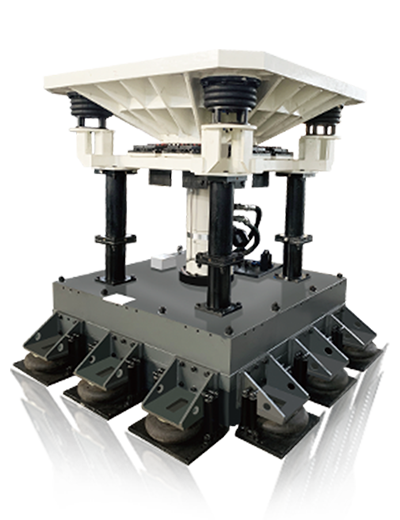
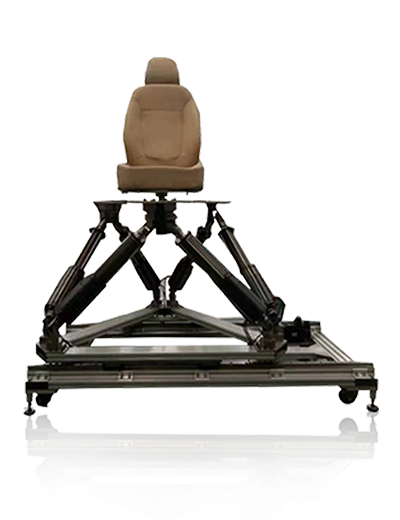
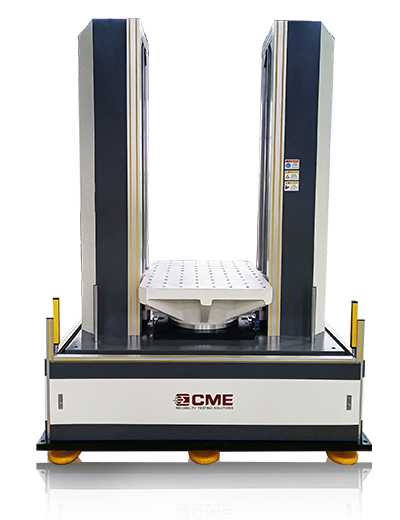
This is where the paradigm shifts from vibration testing to true real world motion simulation. The key enabling technology is the Multi-Axial Simulation Table (MAST), also known as a Multi-Axis Shaker Table or 6-DOF Simulation Table. This article explains the fundamental leap this technology represents and demystifies the process of translating chaotic field environments into precise, repeatable laboratory tests.
The core difference lies in Degrees of Freedom (DOF) and control intelligence.
Aspect | Traditional (Single/Multi-Axis) Vibration Shaker | Multi-Axial Simulation Table (MAST) |
Primary Motion | Linear oscillation along 1 to 3 orthogonal axes (X, Y, Z). | Simultaneous, coordinated movement in up to 6 Degrees of Freedom: 3 Translations (X,Y,Z) + 3 Rotations (Roll, Pitch, Yaw). |
What it Simulates | The symptom: oscillatory acceleration profiles. | The cause: the actual kinematic environment that produces those accelerations within a product. |
Analogy | Listening to individual instruments playing separate notes. | Conducting and hearing the entire orchestra play a complex piece, with all harmonies and interactions intact. |
A MAST table doesn't just shake an object; it manipulates its entire spatial orientation and trajectory over time. This allows it to replicate the true kinematic conditions a product experiences, such as:
A vehicle body rolling while its suspension heaves over a pothole.
A shipboard radar antenna pitching and yawing with the swell of the sea.
An aircraft landing gear experiencing combined vertical shock, braking pitch, and lateral sway.
The power of a multi axis simulation table is harnessing real-world data. Here’s a breakdown of the workflow that transforms field recordings into a controlled laboratory test.
Engineers instrument the product or a surrogate with an array of inertial measurement units (IMUs) and accelerometers. These sensors collect six-degree-of-freedom time-history data during actual operation.
Automotive: Sensors on a vehicle's chassis and wheels during proving ground runs on Belgian blocks, cobblestones, and rough terrain.
Maritime: Sensors on a ship's deck and mast during various sea states.
Aerospace: Flight test data during take-off, landing, and turbulence.
This raw data captures the true, coupled motion environment.
The raw time-history data is processed to create a drive file for the simulation table.
Signal Conditioning: Noise filtering, sensor alignment, and unit conversion.
Kinematic Reconciliation: Ensuring the collected translational and rotational data are physically consistent.
Damage Editing & Acceleration: Removing non-damaging periods (like smooth highway driving) and compressing the timeline to create an accelerated life test without altering the damaging characteristics.
Inverse Kinematics Calculation: This is the critical technical step. The software calculates the exact actuator length changes (for a hexapod MAST) or displacements required for the table platform to reproduce the recorded motions at the product's mounting points.
The processed drive file is loaded into the digital controller of the multi axial simulation table. The system then executes the profile with high fidelity.
The MAST table's hydraulics or electromechanics precisely coordinate all actuators.
The test article mounted on the table experiences the same combined translations and rotations it would in the field.
Engineers monitor the unit under test (UUT) for failures, while sensors verify the reproduced motion matches the command signal.
Moving beyond simple vibration to full real world motion simulation offers transformative advantages:
Higher Fidelity Validation: Tests reveal failure modes that single-axis tests miss, such as bracket failures due to torsional loads or connector issues caused by complex bending.
Reduced Testing Time & Cost: One test on a MAST can replace multiple sequential single-axis tests and, more importantly, reduce the need for expensive, weather-dependent field trials.
Improved Correlation: Test results show a much stronger correlation to actual field performance and durability, increasing confidence in the design.
Accelerated Development Cycles: Problems are identified earlier in the design phase, preventing costly late-stage changes.
At CME Technology Co., Ltd., we don't just build multi axis shaker tables; we provide integrated motion simulation solutions. Our expertise spans the entire chain:
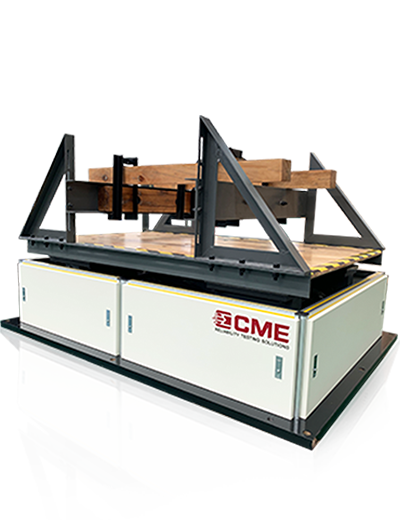
High-Performance MAST Hardware: We engineer robust multi axial simulation tables with high payload capacities (up to 10+ tons) and the precision needed for demanding applications in automotive, aerospace, defense, and maritime sectors.
System Integration & Support: We provide the advanced controllers and software tools that facilitate the data translation and test execution process.
Application Engineering: Our team can assist in developing test strategies and profiles tailored to your specific product and its operating environment.
Ready to move beyond basic vibration and start simulating the true motion environment your products face?
Contact CME's motion simulation experts today. Let us discuss how a Multi-Axial Simulation Table (MAST) can transform your validation process, improve product reliability, and accelerate your time to market.