Jun 24, 2023
Blog



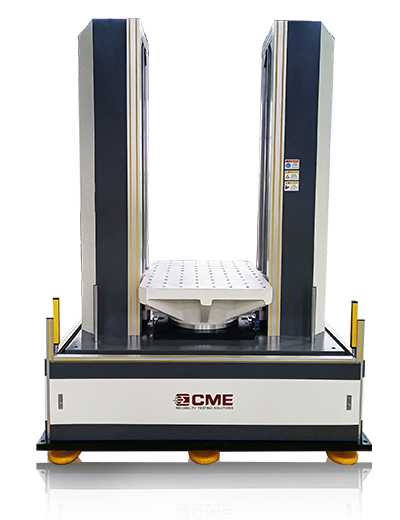
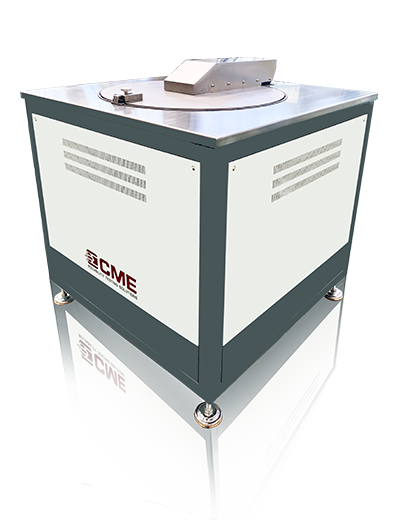
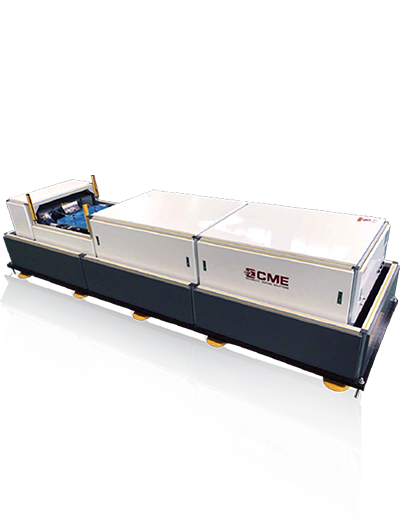
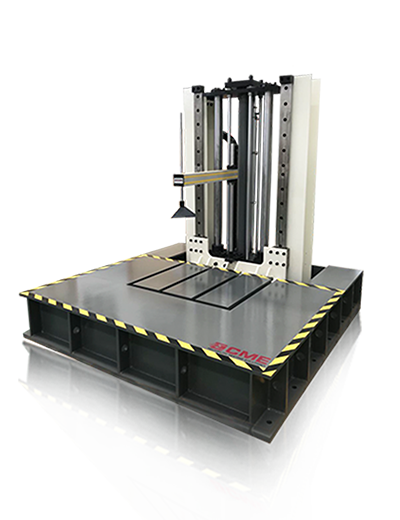
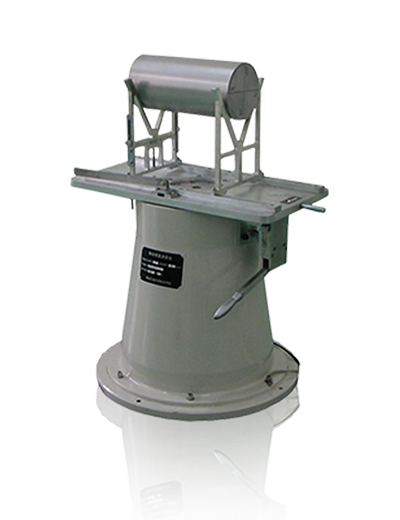
Selecting the right vibration shaker machine is a critical decision that impacts your testing capabilities, budget, and long-term operational efficiency. For engineers and lab managers navigating this choice, the debate often narrows down to two primary technologies: Electrodynamic (ED) Shakers and Servo-Hydraulic (Hydraulic) Shakers. While mechanical shakers (often referring to out-dated, crank-driven mechanical vibration tables) are still mentioned, their limitations in waveform generation and frequency control make them unsuitable for modern, standard-compliant testing.
As leading vibration shaker manufacturers, CME Technology understands that the choice isn't about which technology is universally "better," but which is right for your specific application. This definitive guide provides a detailed comparison and a practical decision framework to help you invest wisely in your vibration testing shaker system.
The following table summarizes the fundamental differences. These are not just specs on a sheet; they directly dictate what you can test and how efficiently.
Feature | Electrodynamic (ED) Shaker | Servo-Hydraulic Shaker |
Core Operating Principle | Lorentz force: Electrical current through a coil in a magnetic field. | Hydraulic fluid pressure driving a piston actuator. |
Frequency Range | Wide & High: Typically 5 Hz to 2,500 Hz+ (some models to 10 kHz). | Low & High-Force: Typically 0.1 Hz to 200-500 Hz. |
Displacement (Peak-to-Peak) | Limited: Usually ≤ 51 mm (2 inches). | Very High: Can be ≥ 100 mm (4 inches), often up to 300+ mm. |
Force / Thrust Rating | Moderate to High (up to many kN). | Extremely High: The most cost-effective solution for > 50 kN forces. |
Waveform Fidelity | Excellent for Sine & Random: Delivers very "clean," high-fidelity waveforms. | Good for low-freq sine; capable of complex transients and road simulation. Less ideal for very high-freq random. |
Typical Applications | HALT/HASS, electronics resonance search, aviation components, MIL-STD-810 high-frequency tests. | Automotive suspension/durability, large structure testing, transportation simulation, low-frequency fatigue, full-scale component tests. |
Beyond the basic specs, consider these critical operational and economic factors.
Electrodynamic Shaker: Higher initial purchase price per unit of force (kN). However, operational costs are generally lower—primarily electricity and occasional cooling system maintenance. They offer excellent long-term value for high-frequency, high-accuracy testing.
Hydraulic Shaker: Lower initial purchase price for high-force systems. But, operational costs are higher due to hydraulic power unit (HPU) energy consumption, hydraulic oil, filters, and more intensive maintenance. Consider the cost of the hydraulic infrastructure itself.
ED Shakers: Require a dedicated electrical supply (often three-phase) and cooling water or a chiller for the amplifier. The shaker itself is relatively compact.
Hydraulic Shakers: Demand significant space for the HPU, which is large, noisy, and generates heat. They require hydraulic plumbing, oil containment, and robust ventilation. The total lab footprint is substantially larger.
For Pure Sine and Broadband Random Vibration (e.g., MIL-STD-810, IEC 60068): ED shakers are the undisputed champion. Their ability to produce precise, high-frequency waveforms is unmatched.
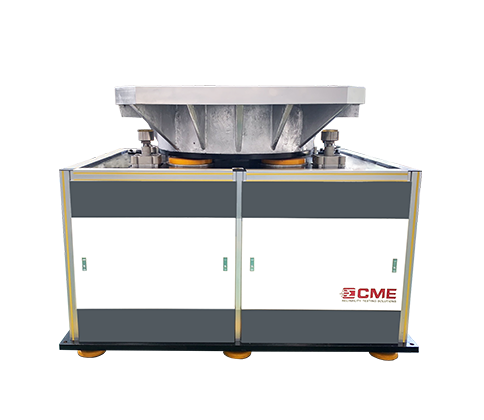
For Low-Frequency Sine, Complex Transients, and Real-World Simulation (e.g., automotive road profiles, seismic events): Hydraulic shakers excel. Their large displacement and high force at low frequencies are ideal. Some advanced shock and vibration table systems from manufacturers like CME can also perform SRS (Shock Response Spectrum) tests, bridging the gap between technologies.
ED Shakers: Maintenance is typically less frequent. Key items include checking armature bearings, replacing flexures, and maintaining the cooling system. They are known for high reliability in controlled environments.
Hydraulic Shakers: Require proactive, scheduled maintenance. This includes monitoring oil quality and temperature, replacing filters and seals, and maintaining the HPU. Leaks and contamination are potential failure modes requiring more hands-on attention.
Choose an ED Shaker if your work centers on:
HALT/HASS for electronic assemblies.
Finding resonant frequencies of aerospace or defense components.
Testing to high-frequency random profiles.
Benchtop testing of smaller, lighter units.
Choose a Hydraulic Shaker if your work centers on:
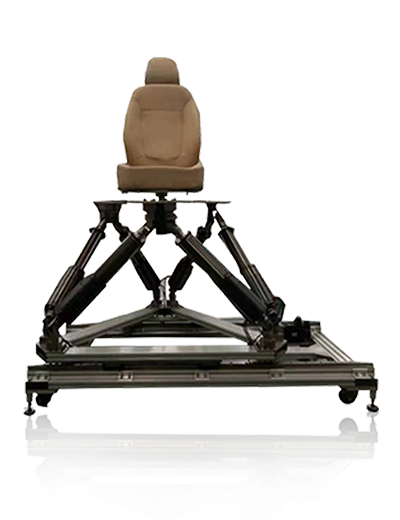
Automotive component durability (e.g., shocks, mirrors, entire seats).
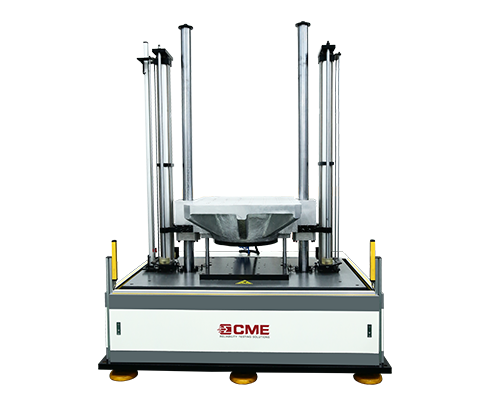
Transportation simulation of large, heavy packages (requires a large mechanical shaker table surface).
Civil engineering or structural testing on concrete beams or large welds.
Any test requiring large displacement under high load.
Whether you need an electrodynamic shaker, a hydraulic shaker table, or a hybrid mechanical vibration table, the manufacturer's expertise is paramount. Here’s what to look for:
Customization: Can they adapt the mechanical shaker table size, interface, or force rating to your unique UUT?
System Integration: Do they provide a complete, turnkey system including controller, software, and essential accessories?
Standards Knowledge: Do their vibration testing shaker systems come with proven profiles for ISTA, MIL-STD, or IEC standards?
Support & Service: What is their global support network like for installation, training, and maintenance?
The "ED vs. Hydraulic" debate is solved by aligning technology strengths with your specific test profiles, budget, and lab constraints. There is no one-size-fits-all answer.
CME Technology, as an experienced vibration shaker manufacturer, offers both high-performance electrodynamic and robust servo-hydraulic systems. More importantly, we provide the engineering consultation to help you navigate this exact decision. We don't just sell vibration shaker machines; we deliver reliable, standards-compliant testing solutions tailored to your lab's mission.
Still unsure which path is right for you?
Contact CME's engineering team today. Share your test requirements, standards, and UUT details for a personalized recommendation and system quotation. Let us help you build the perfect foundation for your reliability testing program.