Jun 07, 2022
Company News



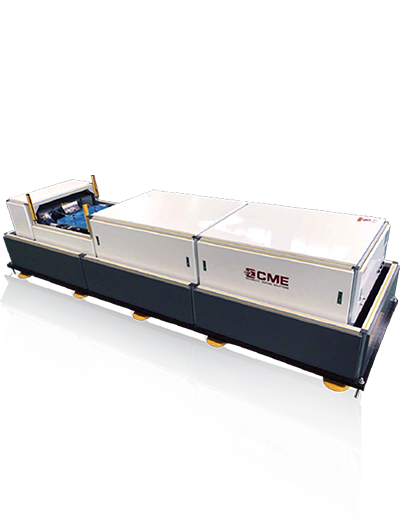
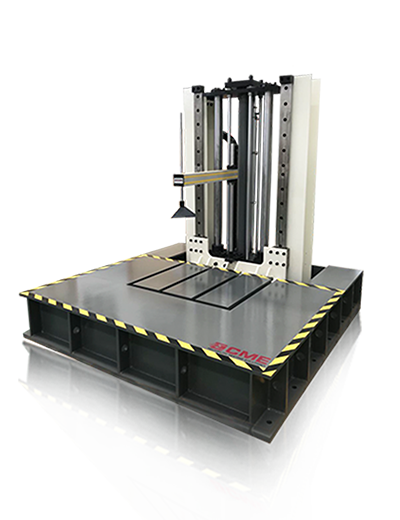
When selecting drop testing equipment for your laboratory, one of the most fundamental technical choices revolves around the release mechanism: Zero-Distance Drop versus Free-Fall Release. This decision directly impacts test repeatability, accuracy, and the types of standards you can reliably comply with. As a leading drop test equipment supplier, CME Technology understands that this choice is not merely about preference, but about matching the mechanism’s physics to your testing goals.
This guide will demystify these two core technologies, explaining their operation, advantages, limitations, and ideal applications to help you make an informed investment in the right drop test apparatus.
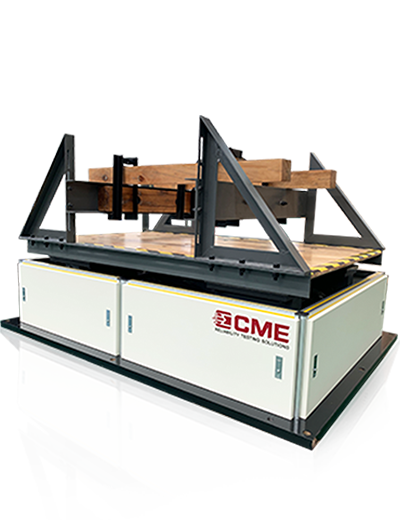
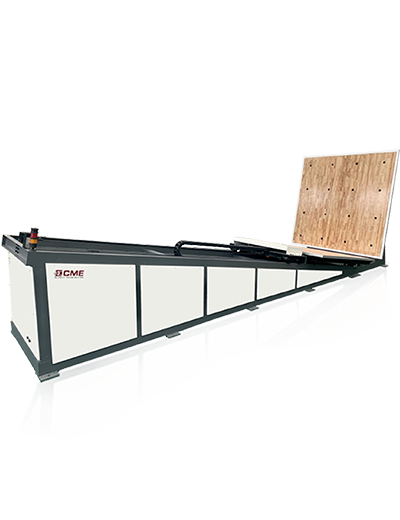
A zero-distance drop tester is engineered for precision. The test sample is firmly secured to a release platform or table. This platform is mechanically lowered until the desired impact surface (corner, edge, or face) is in direct, flush contact with the strike surface (typically a rigid steel or granite plate).
The Drop: At the moment of release, the platform instantly retracts or opens, allowing the sample to fall with zero initial velocity and virtually no horizontal movement. The impact occurs from a true “zero” starting distance.
Analogy: It’s like holding a glass just above a countertop and letting go, versus tossing it from a height.
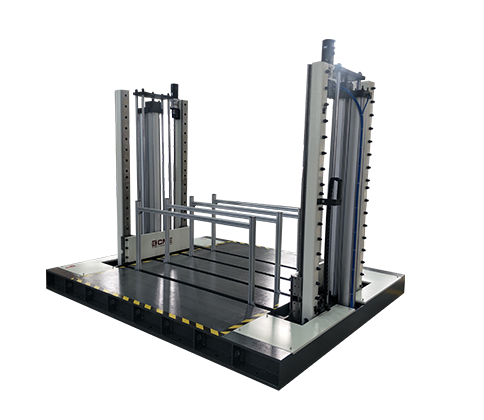
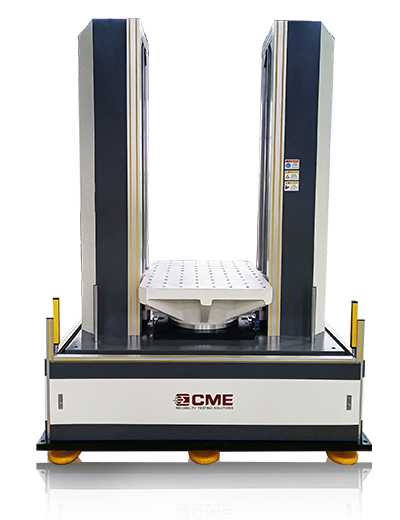
Common Models: This mechanism is typically employed in sophisticated package drop test machines like the CME KRD40 series, designed for repeatable, multi-orientation testing of palletized or heavy loads.
The traditional free-fall drop test mechanism relies purely on gravity. The sample is lifted to the prescribed height and then released via a quick-release mechanism (like hooks, electromagnets, or sliding gates). It then accelerates under gravity until it strikes the impact surface.
The Drop: The sample follows a parabolic arc. Even with careful design, minor pendulum swings or rotational moments can be introduced during release, affecting the angle and point of impact.
Analogy: It’s the classic “drop” as one would imagine – releasing an object from a height and letting gravity take over.
Common Models: This is often used in simpler drop test rigs, drop weight testing machines, and specialized systems for very large items or extreme heights, such as Free Fall Release Hook Testers.
Feature | Zero-Distance Drop Tester | Free-Fall Drop Tester |
Impact Consistency | Excellent. Eliminates swing, ensuring the target face/edge/corner hits first, every time. | Variable. Susceptible to pendulum effects upon release, which can alter the impact orientation. |
Repeatability | Very High. The controlled parameters (platform retraction) yield highly reproducible shock pulses. | Lower. Slight variations in release can lead to different impact conditions and data scatter. |
Test Standard Compliance | Ideal for strict packaging standards (ISTA, ASTM) requiring precise face/edge/corner impacts. | May struggle to consistently meet the stringent orientation requirements of modern packaging tests. |
Suitable for | Packaged products, large/heavy items, fragile electronics where orientation is critical. | Large, bulky items where orientation is less critical; very high drop height tests; simple pass/fail checks. |
Complexity & Cost | Higher initial drop test machine price due to precise engineering. Lower long-term cost from reduced re-testing. | Generally lower initial drop tester price. Simpler drop test apparatus design. |
Fixture Dependency | High. Requires robust, custom drop test fixtures to securely mount the sample to the platform. | Can be simpler, sometimes using straps or cradles. |
For package drop test machine applications, the zero-distance drop tester is overwhelmingly preferred by reputable drop tester manufacturers. Here’s why:
Eliminates Pendulum Effect: This is the single biggest advantage. In free-fall, a heavy package suspended by hooks can swing like a pendulum. This swing converts potential energy into horizontal motion, causing the package to “skid” or hit at an angle upon impact—not a true face, edge, or corner drop. Zero-distance technology removes this variable entirely.
Guarantees Correct Impact Orientation: Standards like ISTA 3A and ASTM D5276 mandate that the package must strike a specified face, edge (12° included angle), or corner (trihedron) with precision. A zero-distance tester, with the sample pre-positioned, guarantees this happens.
Enables True Sequential Testing: Many standards require sequential drops on different faces. A zero-distance tester can reliably re-orient and re-position the sample for each subsequent drop without cumulative error from swinging.
While zero-distance is superior for precision, free-fall drop test mechanisms are not obsolete. They are the practical choice for:
Extreme Height Testing: When testing requires drop heights exceeding 3-4 meters, building a stable zero-distance platform becomes impractical. A free-fall hook system is more feasible and cost-effective.
Very Large or Unfixturable Items: Testing items like entire engine blocks or large, irregular sculptures where building a secure mounting fixture to a platform is impossible.
Simplified, Low-Frequency QC: For basic “survival” testing where the exact replication of a standard is less critical than a general assessment of ruggedness.
Choose a Zero-Distance Drop Tester if:
Your primary need is packaging validation to ISTA, ASTM, or similar standards.
You test consumer electronics or fragile components where impact orientation is critical.
You require high-precision, repeatable data for R&D and design validation.
You want to minimize test variability and retests, maximizing lab efficiency.
Consider a Free-Fall Tester if:
Your main requirement is for very high drop heights (e.g., military or aerospace specifications).
You are testing extremely large, heavy, or awkwardly shaped items that cannot be fixtured to a platform.
Your budget is highly constrained and your test protocols are more qualitative than strictly standards-based.
At CME Technology, we are a drop tester manufacturer that champions accuracy and repeatability. Our flagship KRD40 series Zero-Distance Drop Tester is engineered specifically to overcome the limitations of free-fall systems, providing the precision required for modern packaging and product reliability testing.
We understand that drop test machine price is a consideration, but the true cost lies in inaccurate data, failed shipments, and product returns. Investing in the right mechanism from the start pays long-term dividends.
Not sure which mechanism aligns with your test specifications?
Contact CME’s testing experts today. Share your product details, target standards, and testing goals. We will provide a clear recommendation and a detailed quote for the drop testing equipment that will deliver reliable, standards-compliant results for your laboratory.